
ART AND IDEAS READING CLUB
This isn’t a book club in the traditional sense. It’s an article-based conversation space for volunteers and teaching artists to think together about art, culture, and the world we’re making.
Each month, we’ll explore short readings, essays, interviews, or artworks that open up big questions rather than tidy conclusions. You don’t need to finish (or even start) the reading to participate. Curiosity, presence, and a willingness to reflect are enough.
Our conversations may range across topics like creative political activism, history and memory, language and power, community building, care, resistance, representation, and what art can do in moments of uncertainty. Sometimes the discussion will feel intellectual; other times it may feel personal, emotional, or unresolved—and that’s part of the point.
We meet on the one Monday of each month from 11:30am–12:30pm in a hybrid format. Ahead of each session, we’ll share optional prompts and questions to sit with as you read (or don’t). If you can’t attend live, we’ll post a summary afterward, and we’re also building a WhatsApp reading group for ongoing, low-pressure conversation.
Below you’ll find details on our most recent discussion, along with past selections and sample questions to explore at your own pace.
May
For May, we’ll continue exploring the work of Philippa Pham Hughes—an artist, activist, curator, and self-described “social sculptor.” Hughes uses art to tell identity stories and create spaces where people can engage across differences.
This time, we’ll build on her ideas and begin exploring how her lens (explores how identity and experience impacts belonging) might live within and be inspired by Path with Art.
If you joined us last month, we’re excited to keep going. If you didn’t—please come! You’re very welcome.
Folks who missed the last session might take ~3 minutes to watch this short video ahead of time.
Suggested Readings & Media (the same as last month)
If you’re new or want a refresher, feel free to explore one or more of these before we meet. They’re short and accessible, and will ground our conversation:
Artist Website: Philippa Pham Hughes
Explore her projects and her idea of the “social sculpture,” where art becomes a way to shape relationships, community, and public dialogue.
Project: Hey, We Need to Talk
An art-driven project creating space for conversation across political and cultural divides.
Art Dialogue Deck
We’ll continue using this conversation tool—featuring artworks from museums across the U.S.—to spark dialogue around art, identity, and civic life.
You’re welcome whether you’ve read everything closely, skimmed, or are encountering this work for the first time. Curiosity is enough.
Discussion Meetup
Monday, May 11
11:30am–12:30pm
Hybrid (in person at the artHOME + Zoom)
For March we’ll explore the work of Philippa Pham Hughes—an artist, activist, curator, and self-described “social sculptor.” Hughes uses art to tell identity stories and create spaces where people can engage across differences.
Through installations, video, and participatory projects, she asks a deceptively simple question: What does it mean to be American? Her work explores identity, belonging, culture, and the possibility that art can help people have conversations that might otherwise feel difficult or impossible. Together, we’ll explore a few of her projects and then use a curated art dialogue deck created by university art museums to spark our own conversation about art, identity, and civic life.
Suggested Readings & Media
Please explore one or more of the resources below before the meeting. These are short and accessible, and will give you a sense of Hughes’s work and the ideas we’ll be discussing.
1. Artist Website: Philippa Pham Hughes
Explore Hughes’s projects and her idea of the “social sculpture,” where art becomes a way to shape relationships, community, and public dialogue.
2. Video Poem – We Should Talk
A short video poem reflecting Hughes’s experience as an Asian American woman navigating identity and belonging in the United States.
3. Project: Hey, We Need to Talk
An art-driven project designed to create spaces for conversation across political and cultural divides.
4. Art Dialogue Deck
We’ll also explore a conversation deck created by a network of university art museums across the United States. Each museum contributed an artwork that reflects something about the culture, politics, or history of the United States.
Discussion meetup
Monday, April 6
11:30am–12:30pm
Hybrid (in person at the artHOME + Zoom)
You’re welcome whether you’ve read everything closely, skimmed, or are encountering this work for the first time. Curiosity is enough.
March
February
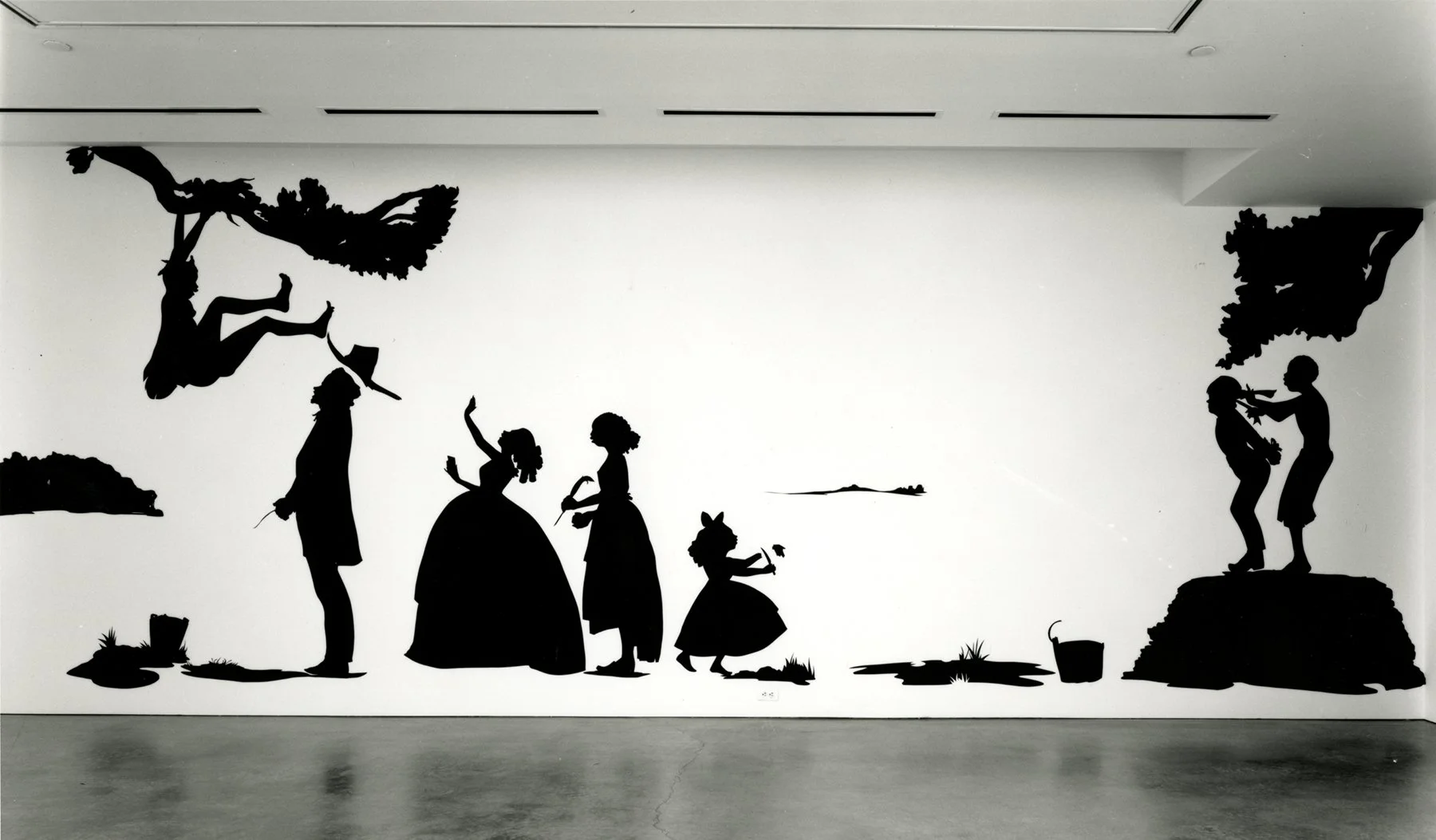
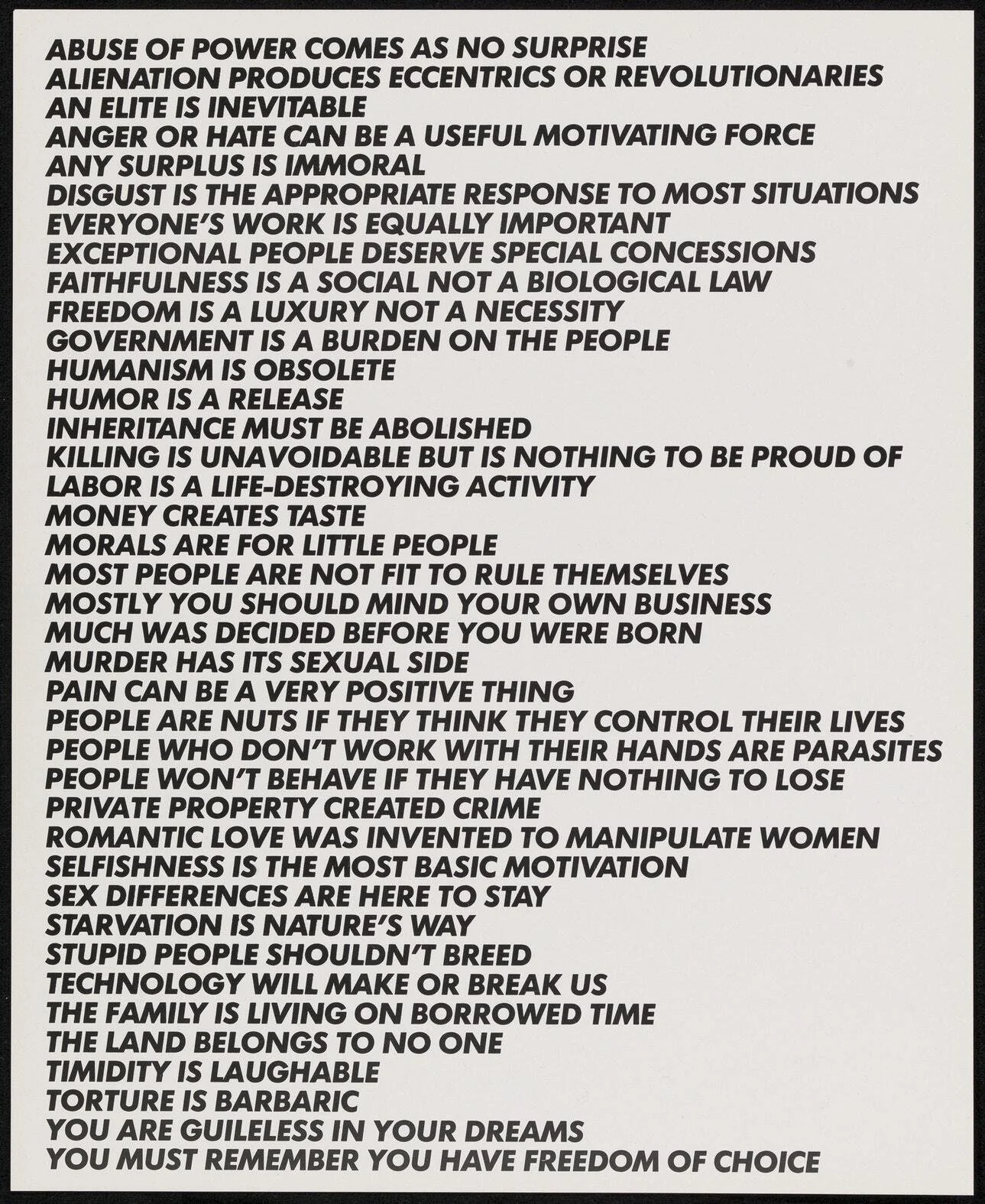
This month, we’ll be spending time with the work of two artists — and — who use language and imagery to challenge how we understand power, history, and truth.
Rather than offering tidy answers, their work opens space for questioning and reflection: about whose stories are told, how meaning is made, and what responsibility art carries in public life. We'll be meeting in-person at the artHOME and virtually (with this Zoom link) on Monday, February 23 from 11:30am to 12:30pm.
A gentle note: we will be talking about race and historical harm, which can feel heavy or activating. Please take care of yourself in whatever ways you need. You are always welcome to step out, pass on a question, or simply listen. We’ll hold the space with care.
This month’s artists & readings:
About the artists (optional background):
Kara Walker
Known for her use of silhouette and provocative imagery to examine race, gender, and historical narratives.
https://www.theartstory.org/artist/walker-kara/
Jenny Holzer
A conceptual artist whose text-based works, often situated in public spaces, use language to provoke and unsettle assumptions about power and truth.
https://www.theartstory.org/artist/holzer-jenny/
Readings / entry points
“What Do We Want History to Do to Us?” — Kara Walker
An essay that invites us to grapple with how history lives in our bodies, institutions, and collective memory.
https://ibw21.org/editors-choice/kara-walker-what-do-we-want-history-to-do-to-us/
Truisms — Jenny Holzer
Short, confrontational texts that use public language to disrupt assumptions and provoke reflection—and contradiction.
https://www.tate.org.uk/art/artists/jenny-holzer-1307/5-ways-jenny-holzer-brought-art-streets
https://emuseum.toledomuseum.org/objects/61846/truisms?ctx=654a459eb8d8523cb6bd99d3b5dfebeeb2449159&idx=9
These are meant as entry points, not exhaustive assignments. Feel free to explore other writing, images, or interviews by or about these artists if something else draws you in.
Discussion meetup
Monday, February 23
11:30am–12:30pm
Hybrid (in person at the artHOME + Zoom)
You’re welcome whether you’ve read everything closely, skimmed, or are encountering this work for the first time. Curiosity is enough.
January
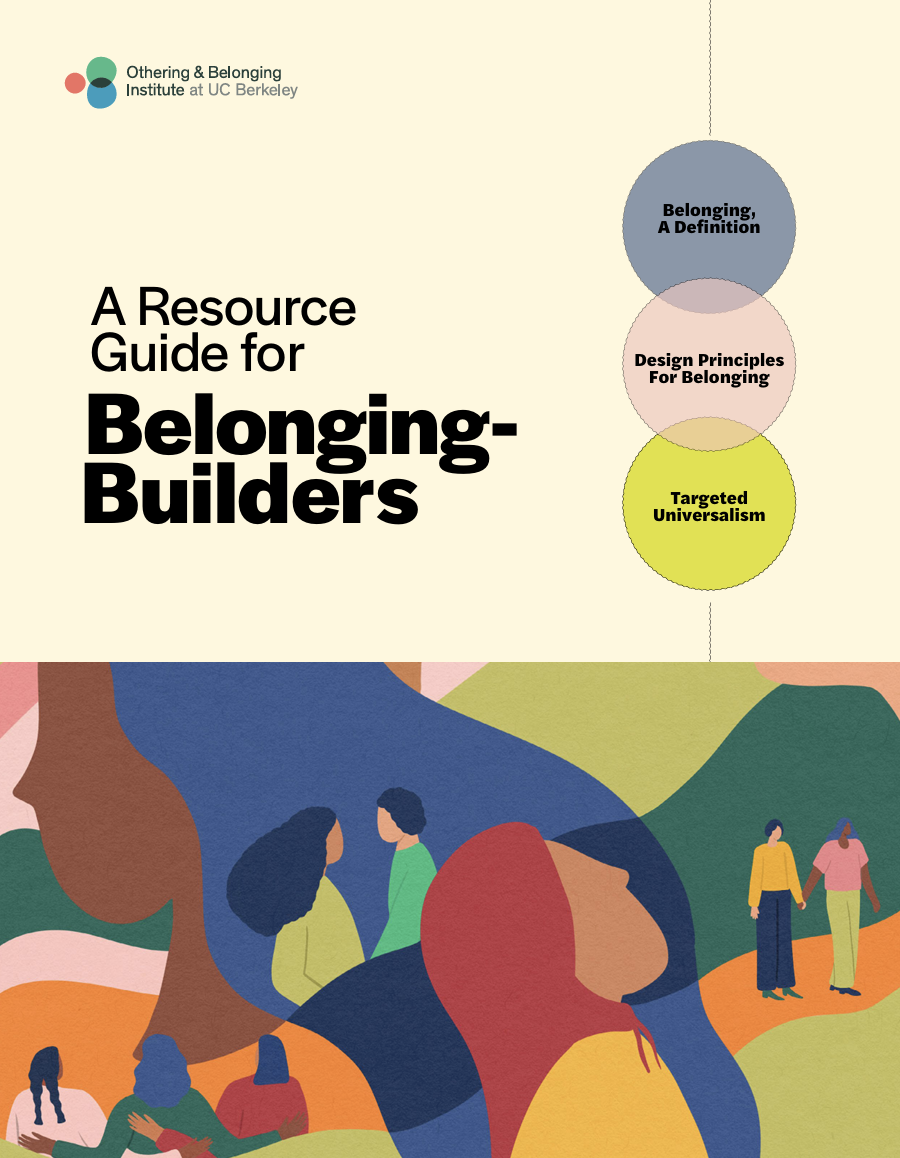
A Resource Guide for Belonging-Builders
Othering & Belonging Institute at UC Berkeley
For January, we are reading A Resource Guide for Belonging-Builders, which introduces key concepts including belonging, othering, and targeted universalism. The guide offers a shared language and framework for thinking about inclusion, power, agency, and structural change—grounded in both research and practice.
Rather than focusing on individual behavior alone, this reading invites us to think about how systems, narratives, and relationships shape who belongs and how. It’s meant to be a practical, reflective foundation we can return to throughout the year.
This reading is a soft launch of our Club, we aren’t having an official meetup but are exploring it in our virtual Teaching Artist/Creative Mentor Orientation.
Guiding Question:
As you read, what stood out to you about the idea that belonging is something we design together, not just something we feel?